

After being diagnosed with breast cancer, Alison’s life shifted dramatically from that of a busy, active mom of two young children working full time at the National Cancer Institute to navigating treatment, recovery, and a new understanding of survivorship. Below, Alison shares firsthand how she navigated it all and found support through her community while adjusting to life beyond diagnosis.
What was your life like before you were diagnosed with cancer?
Prior to my cancer diagnosis, I felt strong and healthy, typically exercising six days a week. I was balancing the demands of parenting a 3-year-old and a 1-year-old with working full-time at the National Cancer Institute (NCI) Center for Cancer Research in the NCI Center for Immuno-Oncology. My hobbies included messy art projects with my kids, baking, Peloton workouts, gardening, and dinners with friends.
How did you find out you had cancer?
I found a lump while breastfeeding my son and was cautiously optimistic that it was a benign finding. Unfortunately, my worst fear was confirmed after a biopsy.
Did your life change immediately after your cancer diagnosis? If so, how?
My life immediately changed after my cancer diagnosis because I felt overwhelmed, but our community seamlessly stepped in. My family instantly and lovingly set up a calendar to have someone visit weekly and help us with childcare, meals, and household duties. Like any mom, my thoughts became consumed with how to help my young children through this diagnosis and beyond.
Did you experience side effects? Do you continue to experience side effects?
I experienced side effects of the steroids, including insomnia. After chemo ended, I unexpectedly required months of steroids to reduce inflammation around my heart as a rare side effect of the immunotherapy. The steroids boosted my energy and appetite but made it difficult to sleep at night. My eyes and skin remain dry, but thankfully I have learned to manage with different topical agents.
Who was there for you after the diagnosis?
After my diagnosis, my family and friends stepped up immediately, despite living states away while we were stationed in Maryland. Family members uprooted their schedules to be with us, and my aunt even sent weekly cards to lift my spirits and cheer me on. I was also lucky to have met a caring community of fellow mom friends when I moved to Maryland, and they carried me through treatment with thoughtful check-ins, meal trains, and gifts that reminded me I wasn't alone. My colleagues at NCI graciously donated leave through the leave bank program, allowing me to stay home with my family when my blood counts were unsafe and throughout my recovery from surgery. I cannot say enough good things about that program—it provided our family with stability and peace of mind when we needed it most.
What was helpful for you?
Many things helped me during treatment—staying active when I felt good, reaching out to friends, enjoying my favorite meals, and walking in the sunshine. This quote carried me through: This is just a chapter, not the whole story. This mantra reminded me that while cancer changed me, it did not define me. It helped me show up with resilience during treatment and provided hope for life after. Through this experience, I tried to become a more present mom, a more empathetic nurse practitioner, and a better friend—and to cherish joy wherever I can find it.
Is there anything that stands out to you about your experience with the health care system (positive or negative)?
Navigating cancer as a patient—rather than as a health care provider—has completely transformed my perspective on the health care system. I learned how something as simple as introducing yourself and explaining your role can profoundly impact patients who are anxiously waiting for the next step in their care. I remember learning to perform bone marrow biopsies as a nurse practitioner and being excited for each procedure as an opportunity to hone my skills. After experiencing my own biopsy as a patient, I realized how terrifying and potentially life changing the process is on the other side. It reinforced how crucial it is to walk someone through each step—before, during, and after the procedure—to reduce anxiety and pain.
How has your life changed since becoming a cancer survivor?
When I was first diagnosed, I was terrified that my life would have to drastically change and I could never return to “normal.” Now, I realize that returning to that previous version of myself is impossible—and I have accepted it. I have grown and developed a stronger appreciation for being present with my children, taking time to truly connect with people, and being mindful about what I put into my body. I feel empowered to make bolder choices that used to scare me because I know a long life is not guaranteed, but we can choose to embrace every moment we have.
Did you make any lifestyle changes due to your diagnosis?
Yes, especially after being diagnosed with immune checkpoint inhibitor myocarditis, I have made intentional changes to decrease inflammation throughout my body. I started to practice yoga in place of my usual intense cardio exercise, began drinking green tea daily, and committed to setting daily intentions.
What’s next? What are your current goals or priorities?
My goal is to create a space for people in the critical transition after treatment and throughout survivorship. I feel that there is a gap in care that exists once active cancer treatment ends. Oncology care focuses heavily on diagnosis and treatment, but survivors may be left navigating physical, emotional, and psychological changes, feeling alone and confused. I want to fill that gap with survivor-led support through clinical insight, community connection, and practical resources. I hope to create space that allows survivors to check in, guide them through transitions at work, navigate resources and referrals, and help with fear of recurrence, and long-term side effects.
What’s an insight, note, or tip that you feel is important for other survivors and their loved ones to know or keep in mind?
I want to tell people going through this journey that it gets better. Chemotherapy is incredibly challenging and often feels like you are living in a fog. But every difficult day of treatment has been completely worth it for the precious time I get to spend with my children and family.
Is there anything else about your cancer survivor or caregiver journey you’d like to share?
During 16 rounds of chemotherapy, someone told me something that helped changed my perspective: you are doing the best you can. As a mom accustomed to juggling a million tasks, I never felt like I was doing enough. Being forced to slow down and accept help was challenging, but remembering those words helped lift some of the guilt I had placed on my own shoulders and ultimately allowed me to focus on living. I would also tell others that cancer treatment looks different for everyone, and life doesn’t stop for this disease. Sometimes that reality is heartbreaking, and sometimes it is a blessing.
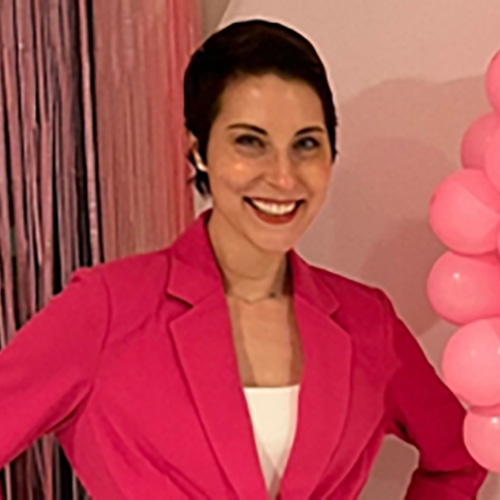
Image: Alison
...while cancer changed me, it did not define me.
...I feel empowered to make bolder choices that used to scare me because I know a long life is not guaranteed, but we can choose to embrace every moment we have.”